When you start a new DIY project or repair job, you might wonder if you should use an impact driver or a drill. Both tools look similar and can spin bits, but their uses are not the same. Choosing the right tool can make your work faster, safer, and cleaner.
Table of Contents
Impact Driver Vs Drill: What Makes Them Different?
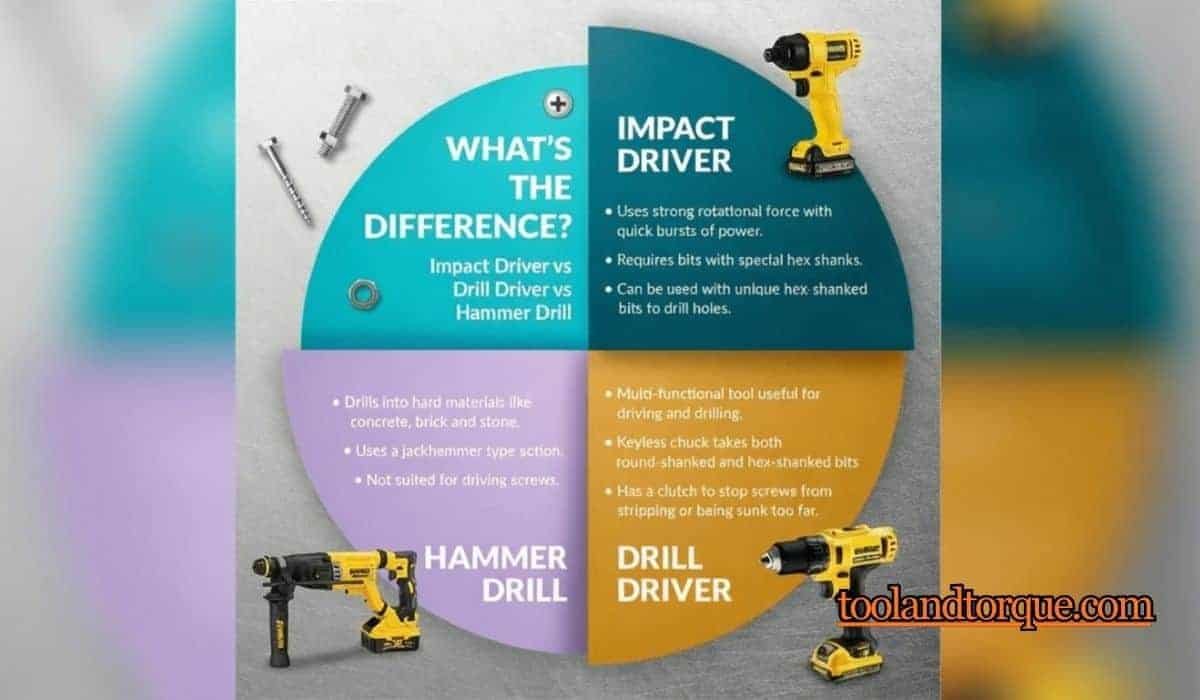
Impact drivers and drills are both handheld power tools, but their design and action are different. Drills use a steady spinning motion. They are good for making holes and driving screws into soft materials. Impact drivers use a spinning motion plus extra bursts of force. This helps drive screws into tougher materials.
A drill is usually heavier and larger. Most drills have a chuck that can hold many sizes of bits. Impact drivers are lighter and shorter, with a hex collet that fits only hex-shank bits. This makes them easier to use in tight spaces.
Comparison Table: Impact Driver Vs Drill
| Feature | Impact Driver | Drill |
|---|---|---|
| Rotational Power | High (up to 2000 in-lbs) | Moderate (up to 600 in-lbs) |
| Torque Bursts | Yes | No |
| Bit Type | Hex-shank only | Round or hex-shank |
| Best Use | Driving long screws, bolts | Drilling holes, light screw driving |
| Size | Compact | Bulky |
When To Use An Impact Driver?
An impact driver is best for jobs that need high force and speed. Here are times when an impact driver is the right choice:
- Driving Long Screws: When you need to drive screws into dense wood, metal, or concrete, impact drivers deliver the needed torque. They push screws without stripping the head.
- Removing Stuck Fasteners: Impact drivers can loosen bolts and screws that are rusted or stuck. The extra force helps break the bond.
- Working with Tough Materials: If you work with hardwood, treated lumber, or sheet metal, an impact driver is more effective.
- Quick Repetitive Tasks: For jobs with many screws (like decking or framing), the speed and power save time and reduce hand strain.
- Tight Spaces: Their shorter body fits better in corners or between beams.
What size drill bit do you need for a 3/8 tap
Practical Example
Installing a deck often involves hundreds of screws. Using a drill can be slow and tiring, while an impact driver makes the job faster and prevents damage to screws.
Non-obvious Insight
Many beginners do not realize that impact drivers are less likely to cam out (slip out of the screw head). This reduces wear on bits and screws.
:max_bytes(150000):strip_icc()/SPR-impact-driver-vs-drill-5116867-hero-37b95592c1a44e97baa3de9f859fbd0a.jpg)
When To Use A Drill?
A drill is your main tool for making holes and driving screws in lighter tasks. Here are times when a drill is the better option:
- Drilling Holes: Standard drills can use twist bits, spade bits, and hole saws. They create holes for wiring, plumbing, or mounting.
- Driving Small Screws: If you’re assembling furniture or working with soft materials, a drill gives better control.
- Precision Tasks: When you need to drill straight, accurate holes, drills allow you to set the speed and pressure.
- Mixing Materials: Some drills can mix paint or mortar with a paddle attachment.
- Versatility: Drills can accept a wider range of bits, making them useful for sanding, polishing, and brushing.
Data Table: Drill Tasks And Bit Types
| Task | Recommended Bit |
|---|---|
| Wood drilling | Twist bit, spade bit |
| Metal drilling | High-speed steel bit |
| Screw driving | Phillips or flat head bit |
| Mixing paint | Paddle mixer |
Non-obvious Insight
Drills often have a clutch setting. This lets you control how much force you use, which prevents overdriving screws and damaging materials. Impact drivers do not have a clutch.
Choosing The Right Tool
It is helpful to know which tool fits your project. Here are some tips:
- If you need to drive many long screws or bolts, use an impact driver.
- If you need to drill holes or work with delicate materials, use a drill.
- For general home repairs, a drill is more flexible.
- For heavy-duty tasks, an impact driver saves time and reduces fatigue.
Comparison Table: Common Mistakes
| Mistake | Impact Driver | Drill |
|---|---|---|
| Using wrong bit | Does not accept round bits | Accepts both round and hex bits |
| Overdriving screws | Easy without experience | Clutch prevents overdrive |
| Stripping screw heads | Less likely | More likely if too much force |
| Working in tight space | Better fit | Often too bulky |
Practical Guidance
For most homeowners, starting with a drill is wise. As you take on bigger projects, adding an impact driver can help with tougher jobs. Many professionals carry both tools to handle different tasks quickly.
If you are buying, check the specs. Look for torque rating (higher is better for impact drivers), battery life, and bit compatibility. Avoid buying impact drivers if you only need to drill holes.

Frequently Asked Questions
What Is The Main Difference Between An Impact Driver And A Drill?
The main difference is that impact drivers use extra bursts of force to drive screws, while drills use steady rotational power to make holes and drive screws. Impact drivers are better for tough jobs; drills are more versatile.
Can I Use An Impact Driver For Drilling Holes?
Yes, but only with special hex-shank drill bits. Standard drill bits do not fit in impact drivers. The holes may not be as clean as those made with a drill.
Why Do Screws Strip Less With Impact Drivers?
Impact drivers deliver force in short bursts, which keeps the bit firmly in the screw head. This prevents slipping and stripping, especially with long or tough screws.
Is A Drill Or Impact Driver Better For Beginners?
A drill is usually better for beginners because it is more flexible and easier to control. Impact drivers require some practice to avoid overdriving screws.
Lastly
Choosing the right tool can make your projects smoother and safer. Whether you use an impact driver or a drill depends on the task, material, and your experience. With the right choice, you can work faster and more confidently.

Leave a Reply