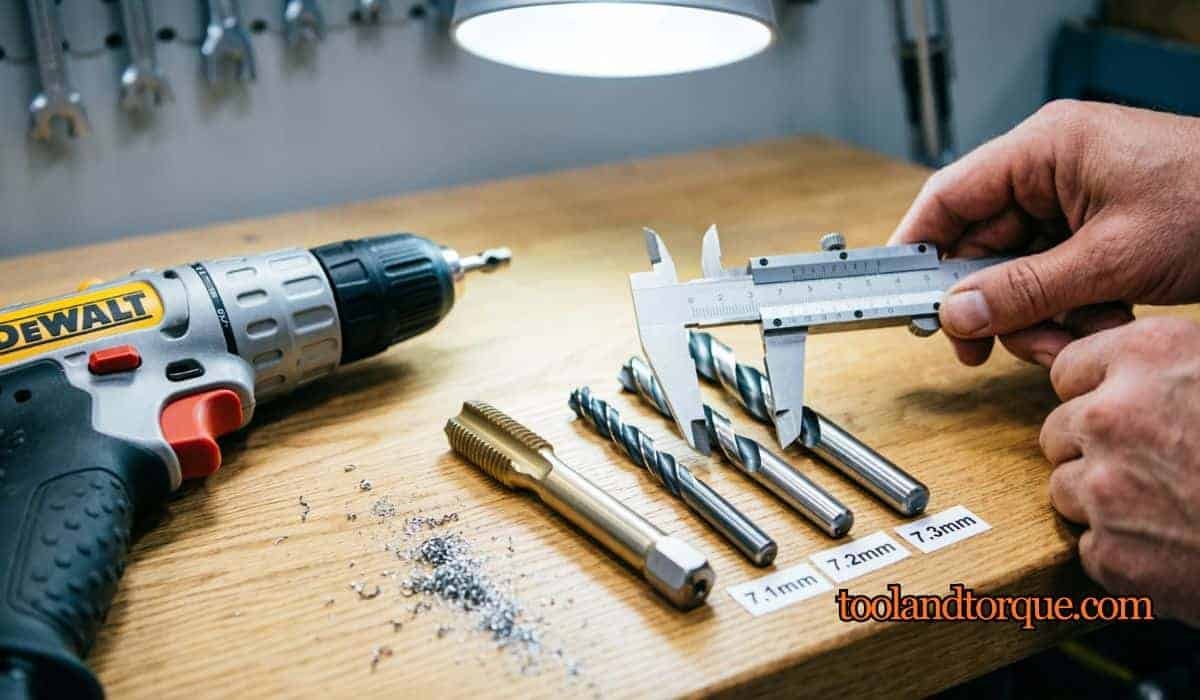
When working with metal, wood, or plastic, creating threaded holes is a common task. If you need to cut threads for a 3/8 tap, choosing the correct drill bit size is essential. Using the wrong size can cause weak threads or damage the material. This article covers all you need to know about picking the right drill bit for a 3/8 tap and eight key items related to tapping holes.
Table of Contents
What Is A 3/8 Tap?
A 3/8 tap refers to a tool that cuts threads for a 3/8-inch bolt or screw. There are different thread types, but the most common for this size is 3/8-16 UNC (Unified National Coarse) and 3/8-24 UNF (Unified National Fine). The first number (3/8) is the diameter, the second is the thread pitch (number of threads per inch).
If you use a tap without the proper drill bit, the threads will not fit well. This can lead to stripped holes, loose fasteners, or even broken taps.
Why Drill Bit Size Matters For Tapping?
The drill bit size sets the hole diameter before tapping. If the hole is too small, the tap will struggle and may break. If the hole is too large, the threads will be shallow and weak. For a 3/8 tap, the drill bit size depends on thread pitch and material.
Common Mistakes
- Using a random drill bit without checking size
- Not considering thread pitch (coarse vs fine)
- Forgetting to account for material hardness
- Not checking tap charts
These mistakes can cause wasted material and extra work.
The Correct Drill Bit Size For 3/8 Tap
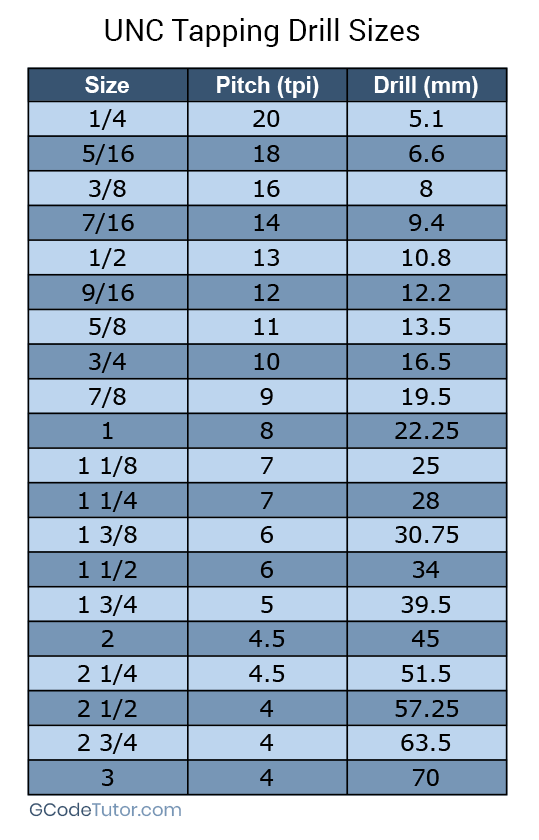
For most projects, the 3/8-16 UNC tap is standard. The correct drill bit size is 5/16 inch (0.3125 inches or 7.94 mm). For a 3/8-24 UNF tap, the size is 21/64 inch (0.3281 inches or 8.33 mm).
The size difference exists because fine threads need more metal to hold the threads. Always check the tap’s specifications before drilling.
| Tap Size | Thread Type | Drill Bit Size (inches) | Drill Bit Size (mm) |
|---|---|---|---|
| 3/8-16 | UNC (Coarse) | 5/16 | 7.94 |
| 3/8-24 | UNF (Fine) | 21/64 | 8.33 |
8 Key Items For Tapping With A 3/8 Tap
There are eight important things to consider when preparing and tapping holes for a 3/8 tap. Each item can affect the quality and strength of the threads.
1. Drill Bit Material
The type of drill bit you choose can make a big difference. High-speed steel (HSS) drill bits are good for most metals and wood. Cobalt drill bits are better for hard metals like stainless steel. Using a soft bit on hard material can cause dullness or breakage.
Non-obvious tip: Using a worn drill bit can make the hole undersized, leading to difficult tapping.
2. Drill Bit Type
There are several types of drill bits suitable for tapping. Twist drill bits are the most common. Split-point bits reduce walking and create a more accurate hole. Brad-point bits are best for wood.
For metal, a twist drill bit with a split point is ideal. It keeps the hole straight and helps the tap follow the path.
3. Tap Type
Not all taps are the same. Hand taps are used with a tap wrench and are good for most jobs. Spiral point taps push chips forward and are better for machine tapping. Spiral flute taps pull chips upward, useful for blind holes.
Using the wrong tap type can make tapping harder and increase the risk of breaking.
4. Material To Be Tapped
The material affects both the drill bit and tap choice. Soft metals like aluminum are easy to tap but need careful drilling. Hard metals like stainless steel require sharp, tough bits and taps.
Non-obvious insight: If you tap holes in plastic, use a slower speed and keep the hole clean. Plastic tends to gum up and block the tap.
5. Lubrication
Lubrication reduces friction and helps remove chips. For steel, use cutting oil. For aluminum, use light oil or even WD-40. For wood, lubrication is rarely needed.
A dry tap can bind and break, especially in hard metals. Always keep the tap wet with lubricant during the process.
6. Drilling Speed
Drilling too fast causes heat, which dulls the bit. For metals, use slow speeds. For wood, moderate speed is fine.
A common mistake is using high speed because it seems faster. This leads to inaccurate holes and short tool life.
7. Clearance And Depth
The hole should be deep enough for the tap and threads. For blind holes (holes that do not go all the way through), use a tap with a tapered tip. For through holes, a standard tap works.
Non-obvious tip: When measuring depth, add a few millimeters for chip clearance.
8. Tap Alignment
Keeping the tap straight is critical. If the tap is at an angle, the threads will be crooked and the fastener will not fit well. Use a tap guide or start the tap carefully by hand.
Many beginners overlook alignment. Even a small error can cause weak threads.
Comparing Drill Bit Sizes For Common Taps
It helps to see how the 3/8 tap drill bit compares to other sizes. Here is a comparison:
| Tap Size | Drill Bit Size (inches) | Drill Bit Size (mm) |
|---|---|---|
| 1/4-20 | #7 (0.201) | 5.1 |
| 5/16-18 | F (0.257) | 6.53 |
| 3/8-16 | 5/16 (0.3125) | 7.94 |
| 3/8-24 | 21/64 (0.3281) | 8.33 |
| 1/2-13 | 27/64 (0.4219) | 10.72 |
This comparison shows how drill bit sizes grow with tap size and thread pitch.
Practical Example: Tapping A Hole For A 3/8 Tap
Suppose you want to tap a hole for a 3/8-16 UNC bolt in steel. You would:
- Mark the hole location.
- Use a 5/16 inch HSS drill bit to drill the hole.
- Apply cutting oil to the area.
- Use a tap wrench to insert the tap, keeping it straight.
- Turn gently, reversing a quarter turn every full turn to clear chips.
- Finish until the tap passes through.
- Clean the hole and test with a 3/8-16 bolt.
If you need a fine thread, use a 21/64 inch drill bit and a 3/8-24 tap.
Tips For Better Tapping Results
- Always use sharp drill bits.
- Mark the hole center with a punch to avoid wandering.
- Use proper lubricant for the material.
- Go slow and steady; force can break taps.
- Check tap and drill charts for accuracy.
Non-obvious tip: After tapping, use compressed air to blow chips from the hole. This prevents debris from interfering with the bolt.
Drill Bit Sizing Formula
The drill bit size can be calculated with a simple formula:
Drill Size = Major Diameter – (1 / Threads Per Inch)
For a 3/8-16 tap:
Major Diameter = 0.375 Inches
Threads Per Inch = 16
Drill Size = 0.375 – (1/16) = 0.375 – 0.0625 = 0.3125 inches (5/16 inch)
For a 3/8-24 tap:
Major Diameter = 0.375 Inches
Threads Per Inch = 24
Drill Size = 0.375 – (1/24) = 0.375 – 0.0417 = 0.3333 inches (rounded to 21/64 inch)
This formula works for most standard taps.
Choosing Between Coarse And Fine Threads
Coarse threads (UNC) are stronger for soft materials and quick assembly. Fine threads (UNF) offer better holding power in hard materials and are less likely to loosen.
| Thread Type | Advantages | Common Uses |
|---|---|---|
| UNC (Coarse) | Easy to tap, strong in soft materials | General hardware, wood, aluminum |
| UNF (Fine) | Better holding, less vibration | Automotive, aerospace, hard metals |
Pick the thread type based on your project needs.
Safety Tips When Tapping
- Wear safety glasses to protect from metal chips.
- Clamp the workpiece firmly to avoid movement.
- Do not force the tap; if it binds, back out and clean.
- Keep hands clear of spinning drill bits.
Ignoring safety can lead to injury or ruined work.

Frequently Asked Questions
What Is The Drill Bit Size For A 3/8-16 Tap?
The correct size is 5/16 inch (0.3125 inches or 7.94 mm). This fits the coarse thread 3/8-16 tap.
What Is The Drill Bit Size For A 3/8-24 Tap?
Use a 21/64 inch drill bit (0.3281 inches or 8.33 mm) for the fine thread 3/8-24 tap.
Can I Use A Metric Drill Bit For A 3/8 Tap?
Yes, but you must match the size closely. For a 3/8-16 tap, use a 8 mm drill bit if you do not have a 5/16 inch bit. For 3/8-24, use 8.3 mm.
What Happens If I Use The Wrong Drill Bit Size?
Using a smaller bit makes tapping difficult and can break the tap. Using a larger bit results in weak threads and poor bolt holding.
How Do I Know Which Thread Type I Need For My Project?
Check the bolt or screw you plan to use. If it is labeled UNC or UNF, match your tap and drill bit accordingly. Use coarse for general work and fine for precision or hard materials.
Final Thoughts
Choosing the right drill bit for a 3/8 tap is a simple but important step. Using the correct size (5/16 inch for 3/8-16 or 21/64 inch for 3/8-24) will give strong, reliable threads. Remember the eight key items: drill bit material, drill bit type, tap type, material, lubrication, drilling speed, clearance, and alignment. These affect your results more than many realize.
Pay attention to details, use the proper tools and techniques, and your tapped holes will work perfectly every time. If you ever need to check, tap charts and official sources are always worth a look.

Leave a Reply