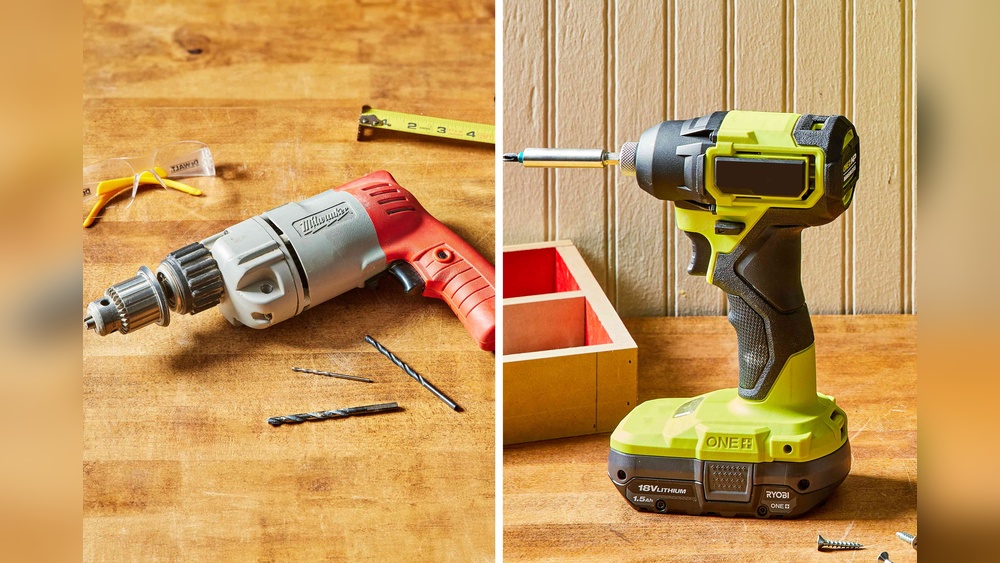
Many people see power tools and wonder if they do the same job. Impact drivers and hammer drills look similar, but they work differently and are made for different tasks. If you’re new to DIY or construction, knowing the difference will help you choose the right tool and avoid mistakes.
Table of Contents
What Is An Impact Driver?
An impact driver is a power tool that drives screws and bolts quickly. It uses a rotating force combined with bursts of extra torque. This helps it drive screws into tough materials like hardwood or metal without stripping the screw head.
Most impact drivers are smaller and lighter than hammer drills. They use a hex chuck that accepts only hex-shanked bits, which makes changing bits fast. A typical impact driver delivers up to 3,200 RPM and 1,800 in-lbs of torque, much higher than a standard drill.
Common Uses
- Installing drywall screws
- Building decks
- Driving long screws into wood
- Assembling furniture
Impact drivers are not suitable for drilling holes in concrete or brick. They work best for fastening.
What Is A Hammer Drill?
A hammer drill is designed for drilling holes, especially in hard materials like concrete, brick, and stone. It combines normal drilling with a hammering action that moves the bit forward and backward rapidly. This extra movement breaks up tough material as the bit drills.
Hammer drills often have a keyed or keyless chuck that can accept round and hex bits. They are usually heavier and bulkier. Most hammer drills deliver up to 3,000 RPM, but their hammering force can reach 40,000 BPM (blows per minute).
Typical Uses
- Drilling holes for anchors in masonry
- Installing electrical boxes in concrete walls
- Making holes in tile or stone
- Drilling into thick wood
Hammer drills can also work as regular drills by turning off the hammer function. They are not good for driving screws, especially long or thick ones.
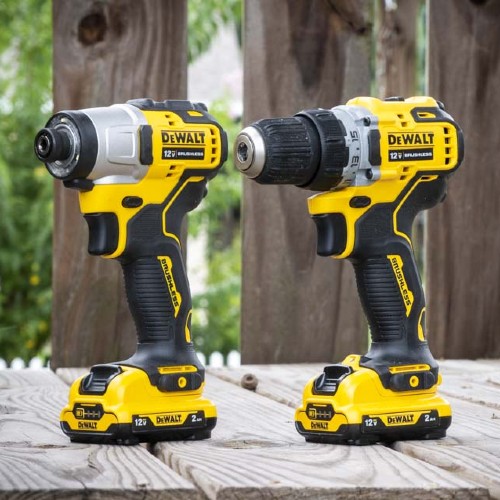
Key Differences: Impact Driver Vs Hammer Drill
The main difference is how each tool works and what tasks it can handle. Here’s a clear comparison:
| Feature | Impact Driver | Hammer Drill |
|---|---|---|
| Primary Function | Driving screws/bolts | Drilling holes |
| Mechanism | Rotational impacts | Hammering + rotation |
| Chuck Type | Hex only | Keyed/keyless |
| Best Material | Wood, metal | Concrete, masonry |
| Torque | High | Moderate |
| Size | Compact | Bulkier |
Two tools may look similar, but their internal parts and purpose are not.
Which Tool Should You Use?
Choosing between an impact driver and a hammer drill depends on your project:
- If you need to drive a lot of screws or work with tough wood, an impact driver is faster and easier.
- If you need to drill into concrete or brick, a hammer drill is necessary. A regular drill will struggle or fail.
- For home projects like furniture assembly or hanging shelves, an impact driver is often enough.
- For mounting heavy objects to masonry walls, a hammer drill is the better choice.
Some people try to use one tool for everything. This is a common mistake. Using a hammer drill to drive screws can damage the screw or the surface. Using an impact driver to drill into masonry won’t work well, and you may burn out the motor.
When should you choose an impact driver over a drill
Practical Insights Most Beginners Miss
Many new users think higher torque means better performance for all jobs. While impact drivers have high torque, they can damage delicate surfaces or strip small screws if you’re not careful. Always start slow and use the right bit.
Another overlooked point is bit compatibility. Impact drivers need impact-rated bits to avoid breaking. Hammer drills need masonry bits for concrete. Using the wrong bit can waste time and ruin materials.
Also, battery life can vary a lot. Hammer drills use more power when drilling into concrete. If you use cordless tools, carry extra batteries for big jobs.
Real-world Examples
A contractor building a deck uses an impact driver to drive hundreds of screws quickly. The tool’s compact size lets him work in tight spaces. But when he needs to install anchor bolts in a concrete slab, he switches to a hammer drill.
A homeowner wants to hang a heavy mirror on a brick wall. He tries an impact driver but struggles. Switching to a hammer drill with a masonry bit, he drills the hole easily and safely.

Safety And Maintenance Tips
- Always wear safety glasses when using either tool.
- Use the correct bit for each material.
- Do not force the tool if it stalls; check the bit and material.
- Keep your tools clean and check for worn parts.
- Store batteries in a cool, dry place.
These simple steps help prevent injuries and extend tool life.
Comparison: Performance And Price
Here’s how performance and price often compare:
| Criteria | Impact Driver | Hammer Drill |
|---|---|---|
| Average Price | $80–$150 | $100–$200 |
| Battery Life | Longer (light loads) | Shorter (heavy loads) |
| Noise Level | High | Very High |
| Skill Level | Beginner-friendly | Requires care |
| Maintenance | Low | Moderate |
While both tools cost about the same, hammer drills have more features and may need more care.

Frequently Asked Questions
Are Impact Drivers And Hammer Drills Interchangeable?
No, they are not interchangeable. Impact drivers are for fastening, while hammer drills are for drilling into tough materials.
Can I Use A Hammer Drill To Drive Screws?
You can, but it’s not ideal. Hammer drills may damage screws or surfaces. Use an impact driver for best results.
Do I Need Special Bits For Each Tool?
Yes. Impact drivers need impact-rated bits; hammer drills need masonry bits for concrete and stone.
Which Tool Is Better For Home Use?
For everyday home projects, an impact driver is more useful. If you plan to drill into masonry, you’ll need a hammer drill.
Are These Tools Safe For Beginners?
Both tools are safe if used correctly. Always read the manual and use the right safety gear.
Final Word
Both impact drivers and hammer drills have their place in any toolbox. Knowing their strengths helps you finish jobs with less effort and fewer mistakes. Use each for its intended purpose, and you’ll get the best results every time.

Leave a Reply