Choosing the right nail gauge and size for molding is important if you want your trim to look clean and last long. Many homeowners and even professionals make mistakes by picking nails that are too big, too small, or not suited for the job.
The right nail holds molding securely without splitting the wood or leaving ugly marks. This article explains which nail gauges and sizes are best for different types of molding, how to select them, and what mistakes to avoid.
Table of Contents
Why Nail Gauge And Size Matter For Molding?
When installing molding, the nails you use affect both the look and strength. If you use a thick nail, it can split thin moldings. If the nail is too short, the trim might fall off. A nail that is too long can poke through the wall and create hazards. Nail gauge refers to how thick the nail is, and size means the length. Both must suit the molding type and wall material.
For example, crown molding usually needs longer nails than baseboards because it hangs higher and must support its weight. Shoe molding, which is thin, needs a smaller gauge to prevent splitting. People often use brad nails or finish nails, but the right choice depends on the molding and the wall.
Common Types Of Molding And Nail Needs
1. Baseboard Molding
Baseboards are often made from MDF, wood, or PVC. They range from 3 to 6 inches high. These are usually installed over drywall.
- Recommended gauge: 15 or 16
- Length: 2 to 2.5 inches
A 16-gauge finish nail is strong enough for most baseboards. Thicker 15-gauge nails are better for wider boards or when attaching to studs.
2. Crown Molding
Crown molding is decorative and sits at the wall-ceiling joint. It is often made from wood, MDF, or polyurethane.
- Recommended gauge: 15 or 16
- Length: 2 to 2.5 inches
Longer nails help anchor crown molding securely, especially when nailing into ceiling joists.
3. Chair Rail Molding
Chair rails protect walls from chairs and add visual interest. They are thinner than baseboards.
- Recommended gauge: 16 or 18
- Length: 1.5 to 2 inches
An 18-gauge brad nail works for lightweight molding. For heavier rails, use 16-gauge nails.
4. Shoe Molding
Shoe molding is small and flexible, covering gaps between the floor and baseboard.
- Recommended gauge: 18
- Length: 1 to 1.5 inches
Brad nails minimize splitting in thin shoe molding.
5. Casing Molding
Casing trim frames doors and windows. It is usually medium thickness.
- Recommended gauge: 16
- Length: 2 inches
A 16-gauge finish nail provides enough holding power without damaging the trim.
Nail Gauge Vs. Size: What’s The Difference?
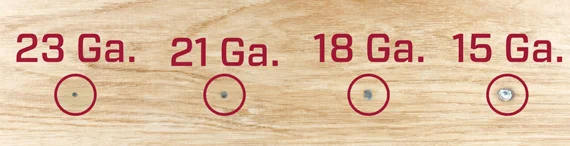
Many people confuse gauge and size. Gauge is about thickness—the higher the number, the thinner the nail. Size means length, measured in inches.
Here is a simple comparison:
| Nail Gauge | Diameter (inches) | Best Use |
|---|---|---|
| 15 | 0.072 | Heavy trim, crown molding |
| 16 | 0.062 | Baseboards, casing |
| 18 | 0.047 | Shoe molding, small trim |
A 15-gauge nail is thicker and stronger, but may leave a bigger hole. An 18-gauge nail is thinner and less visible but cannot hold heavy trim.
How do you take out finish nails cleanly
Selecting The Best Nail Gauge For Molding
The best nail gauge depends on the type of molding, wall material, and whether you want the nails to show.
- For heavy molding: Use 15-gauge nails. They grip well and are less likely to bend.
- For standard baseboards or casing: 16-gauge nails are the most common. They balance strength and appearance.
- For delicate or thin molding: 18-gauge brad nails prevent splitting and leave tiny holes.
Some experts use a combination: 16-gauge for main attachment and 18-gauge for securing ends or corners.
Choosing Nail Length For Molding
The nail should be long enough to go through the molding and into the wall or stud. If it is too short, the molding will loosen. Too long, and the nail may poke through surfaces.
A rule of thumb: Use a nail at least twice as long as the molding thickness.
Here is a quick guide:
| Molding Thickness (inches) | Recommended Nail Length (inches) |
|---|---|
| 1/2 | 1 to 1.5 |
| 3/4 | 1.5 to 2 |
| 1 | 2 to 2.5 |
For most trim, 2-inch nails are enough. For thick crown molding, use up to 2. 5 inches.
Finish Nails Vs. Brad Nails: Which To Use?
Finish nails are thicker (15 or 16 gauge) and hold molding tightly. They are good for baseboards, casing, and crown molding. The hole is larger, so you need wood filler.
Brad nails are thinner (18 gauge). They work best for shoe molding and thin trim. The holes are small and easier to hide.
Here is a comparison:
| Type | Gauge | Uses | Hole Size |
|---|---|---|---|
| Finish nail | 15/16 | Baseboards, crown, casing | Medium |
| Brad nail | 18 | Shoe, light trim | Small |
For most molding, finish nails are best. For delicate areas, use brad nails.
Mistakes To Avoid When Choosing Nails For Molding
Many people use nails that are too thick or too short. This can split the molding or leave it loose. Others use nails that are too long, which can damage walls.
Common mistakes:
- Using framing nails for trim (too thick)
- Using short nails that do not reach studs
- Not matching nail gauge to molding thickness
- Using nails with no corrosion protection in damp areas
A non-obvious mistake: Some nails are made for pneumatic nailers only. Using them with a hammer can bend them and ruin the trim. Another thing beginners miss is that MDF and polyurethane moldings need specific nails to prevent cracks.
What size finish nails should I use for trim work
Tips For Professional-looking Molding Installation
- Pre-drill holes for thick or brittle molding. This avoids splitting.
- Use wood filler to hide nail holes after installation.
- Check for studs before nailing baseboards and casing.
- Angle nails slightly for stronger holding power.
- Avoid nailing too close to the edge of the molding.
These steps help your molding stay tight and clean for years.
When To Use Pneumatic Nailers?
Pneumatic nailers save time and give consistent results. For large projects, like installing crown or wide baseboards, a nailer makes work easier. Nailers also work better with finish nails, as they push them in quickly and smoothly.
However, for small jobs or thin trim, hand nailing is fine. Just make sure to use the correct gauge and length.
Nail Material And Coating
Most molding nails are made from steel. For humid areas or bathrooms, use galvanized nails to prevent rust. Some nails have adhesive coatings that help them grip wood better.
If you use MDF or composite trim, avoid cheap nails that bend easily. Stainless steel is best for outdoor or damp locations.

Nail Placement For Different Moldings
Proper nail placement helps molding look good and stay secure.
- Baseboards: Nail into studs, about every 16 inches.
- Crown molding: Nail into ceiling joists and wall studs.
- Shoe molding: Nail every 12-18 inches, but avoid nailing into flooring.
- Casing: Nail around the frame, focusing on corners and midpoints.
Misplaced nails can cause the trim to loosen or warp.
Non-obvious Insights For Better Results
Most beginners focus only on nail gauge and length, but two less-known factors matter:
- Type of wall behind the molding: Drywall holds nails differently than plaster or concrete. For plaster, use longer nails or anchors.
- Humidity and temperature: Wood can expand or shrink. Nails that are too short can loosen over time as molding moves.
Also, using a nail set to sink nails below the surface prevents damage to the trim. Many overlook this step and end up with raised nail heads.
Real-world Example: Installing Crown Molding
A homeowner used 18-gauge brad nails for crown molding in a living room. The trim sagged after a few months because the nails were too thin. After switching to 15-gauge finish nails (2. 5 inches), the crown molding stayed tight and looked better.
This shows that nail gauge and length make a big difference.
Comparison Of Nail Gauges For Different Moldings
Here’s a summary for quick reference:
| Molding Type | Gauge | Length | Finish/Brad |
|---|---|---|---|
| Baseboard | 16 | 2″ | Finish |
| Crown | 15 | 2.5″ | Finish |
| Chair Rail | 16/18 | 1.5–2″ | Brad/Finish |
| Shoe | 18 | 1–1.5″ | Brad |
| Casing | 16 | 2″ | Finish |

How To Hide Nail Holes?
After installing molding, fill nail holes with wood filler or putty. Sand smooth and paint over. For stained trim, match the filler color. Using brad nails makes this step easier because the holes are smaller.
Expert Advice For Selecting Nails
Professional carpenters recommend testing nail size on scrap molding before installation. This checks for splitting and confirms holding power. Also, buying high-quality nails pays off—cheap nails bend, jam nailers, and rust.
Frequently Asked Questions
What Is The Best Nail Gauge For Baseboards?
The 16-gauge finish nail is the most popular for baseboards. It offers enough strength without splitting the wood. Use 2-inch nails to reach studs for a secure hold.
Can I Use Brad Nails For Crown Molding?
Brad nails (18-gauge) are not strong enough for crown molding. Use 15- or 16-gauge finish nails, at least 2 to 2.5 inches long, to support the heavier trim.
How Do I Know If My Nail Is Too Thick?
If the nail splits the molding or leaves a large hole, it is too thick. Choose a higher gauge (thinner nail) for delicate trim, and test on scrap pieces first.
Should I Use Galvanized Nails For Molding?
Galvanized nails are best in humid or wet areas, like bathrooms. They resist rust and keep molding tight for longer. For dry rooms, regular steel nails are fine.
Is It Better To Hand Nail Or Use A Nailer?
Nailers give quick, consistent results, especially for large projects. Hand nailing works for small jobs but needs careful placement. Always use the right gauge and length.
Final Word
Choosing the right nail gauge and size for molding is more than just picking a nail off the shelf. It’s about matching the nail to the molding, wall material, and finish you want. Careful selection prevents splitting, loose trim, and ugly holes.
By following these tips and using the correct gauge and length, your molding will stay secure and look great for years.

Leave a Reply