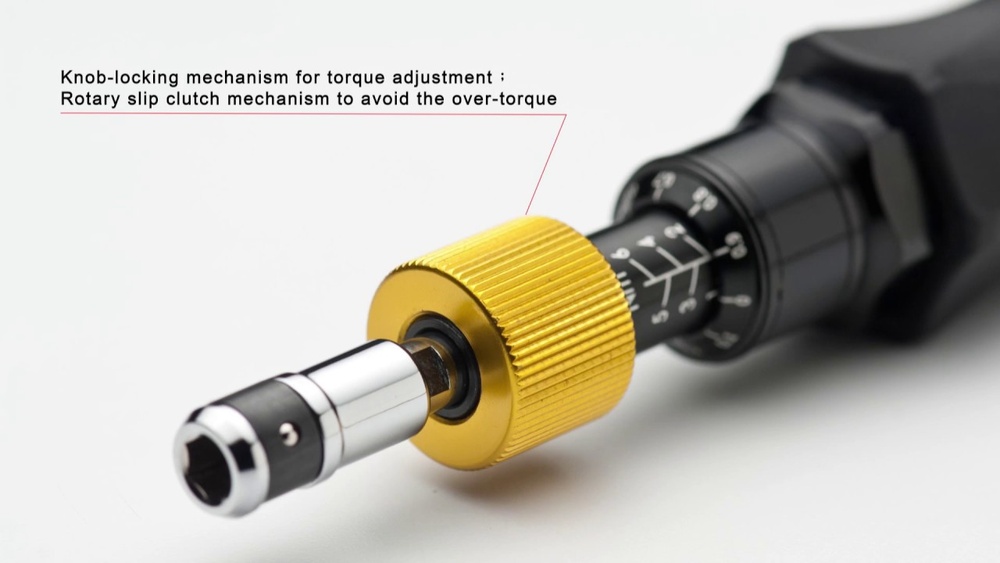
A torque screwdriver is a special tool for tightening screws to a precise force. This tool is used in electronics, automotive work, medical devices, and any situation where over-tightening or under-tightening can cause problems. It helps prevent damage to equipment, ensures safety, and makes assembly more reliable.
If you’ve ever wondered why regular screwdrivers sometimes result in broken or loose screws, the answer often lies in the lack of torque control. Let’s see how torque screwdrivers work, how they differ from standard screwdrivers, and why they are critical in many industries.
Table of Contents
What Is A Torque Screwdriver?
A torque screwdriver is designed to apply a specific amount of twisting force, or torque, when turning a screw. Torque is measured in units like inch-pounds (in-lb) or Newton-meters (Nm). Unlike standard screwdrivers, which rely on the user’s hand strength, a torque screwdriver has mechanisms to control and limit how much force is applied.
Some torque screwdrivers are manual, while others are electric or pneumatic. Manual torque screwdrivers look similar to regular screwdrivers but have special internal parts. Electric and pneumatic versions are used for production lines and larger assemblies.
Why Torque Matters?
Applying the right amount of torque is essential for several reasons:
- Prevents over-tightening: Excess force can strip threads, break screws, or damage components.
- Avoids under-tightening: Too little force can cause screws to loosen over time, risking failure.
- Ensures consistency: Every screw gets the same force, which is vital for quality control.
- Protects sensitive materials: Electronics and medical devices often have delicate parts that need careful assembly.
For example, in electronics manufacturing, applying too much torque can crack a circuit board. In automotive repairs, under-tightening a bolt could lead to safety hazards.
How Does A Torque Screwdriver Work?
The main function is to control the torque applied to a screw. Here’s how it works:
Internal Mechanism
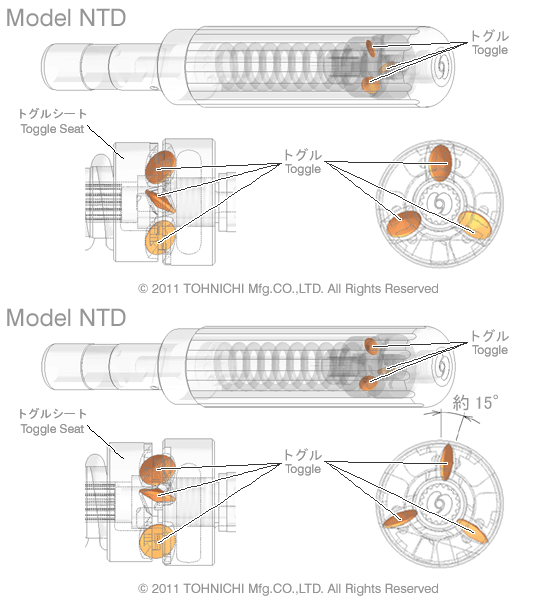
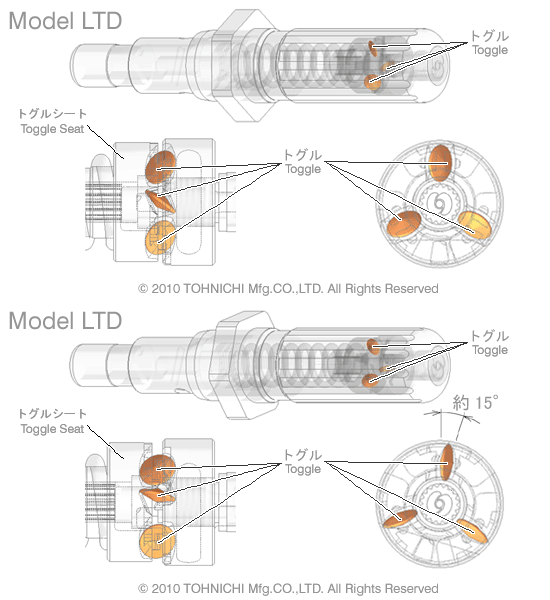
Most manual torque screwdrivers use a clutch mechanism. When the set torque is reached, the clutch slips or clicks, preventing further force. The user feels or hears this feedback and knows to stop.
Setting The Torque
- There is usually a dial, scale, or digital setting to select the desired torque value.
- The screwdriver is adjusted before use to match the specifications for the job.
Applying Torque
- The user turns the handle as with a normal screwdriver.
- As the screw tightens, resistance increases.
- Once the set torque is reached, the clutch mechanism activates.
- The screwdriver “slips,” clicks, or stops turning, signaling that the correct torque has been applied.
Example: Manual Torque Screwdriver
If you set a torque screwdriver to 4 in-lb for a small electronics screw, the tool will let you tighten until you reach 4 in-lb. Once you hit that limit, the clutch disengages, and you cannot apply more torque, even if you try.
Example: Electric Torque Screwdriver
In electric models, sensors monitor torque. When the desired force is achieved, the motor automatically stops or slows. This makes assembly faster and reduces human error.
Types Of Torque Screwdrivers
There are several types, each suited to different tasks:
Manual (click-type)
- Most common for small jobs and repair work.
- Clutch mechanism gives physical feedback.
Electric
- Used in factories and assembly lines.
- Can be set for different torque levels.
- Some include digital displays.
Pneumatic
- Powered by compressed air.
- Used in high-volume production.
- Precise and fast.
Cam-over
- Clutch “cams over” and prevents extra torque.
- Often used for delicate tasks.
Comparison Of Torque Screwdriver Types
| Type | Power Source | Typical Application | Torque Range | Feedback |
|---|---|---|---|---|
| Manual | Hand | Electronics, repair | 0.5–10 Nm | Click or slip |
| Electric | Electric motor | Assembly lines | 1–50 Nm | Digital display, motor stop |
| Pneumatic | Compressed air | Mass production | 2–100 Nm | Sound, motor stop |
| Cam-Over | Hand | Precision work | 0.2–3 Nm | Cam disengage |
Key Parts Of A Torque Screwdriver
A torque screwdriver has several important components:
- Handle: Ergonomic grip for easy turning.
- Torque adjustment mechanism: Dial, scale, or digital setting to select torque value.
- Clutch: Internal part that controls torque.
- Shaft and tip: Made from strong materials to prevent wear.
- Feedback system: Click, slip, or visual display to signal correct torque.
Example: Anatomy Of A Manual Torque Screwdriver
| Component | Function |
|---|---|
| Handle | Allows comfortable grip and turning |
| Torque Dial | Sets desired torque value |
| Clutch | Prevents over-tightening |
| Shaft | Transfers force to the screw |
| Tip | Fits into screw head |
How To Use A Torque Screwdriver?
Using a torque screwdriver is straightforward, but proper technique is important for accuracy.
- Select the right screwdriver for your screw type and torque requirement.
- Set the torque using the dial or digital setting.
- Insert the tip into the screw head, keeping the tool aligned.
- Turn the handle steadily.
- Stop turning as soon as you feel or hear the click/slip. This means the correct torque has been reached.
- Repeat for each screw if multiple screws need identical torque.
Practical Tips
- Always check the torque calibration before critical jobs.
- Use the correct bit size for the screw head to avoid slippage.
- For sensitive electronics, start with lower torque settings.
- Clean screw threads for more accurate torque readings.
Common Mistakes When Using Torque Screwdrivers
Even experienced technicians make errors. Here are typical mistakes and how to avoid them:
- Incorrect torque setting: Always double-check the dial or display.
- Using wrong bit size: This can cause damage or inaccurate torque.
- Not calibrating: Tools lose accuracy over time; calibration is essential.
- Ignoring click/slip: Continuing to turn after feedback can over-tighten screws.
- Applying side force: Keep the tool straight to avoid false readings.
Calibration And Maintenance
Torque screwdrivers must be calibrated regularly. This ensures accuracy and reliability. Calibration is usually done with specialized equipment, comparing the tool’s output to a known standard.
- Most manufacturers recommend calibration every 6–12 months, depending on usage.
- Signs of poor calibration include inconsistent torque, damage to screws, or feedback not matching the set value.
- Maintenance includes cleaning, checking the clutch, and lubricating moving parts.
Calibration Example
A technician uses a calibration device to measure the torque delivered by the screwdriver at several settings. If the readings are off, adjustments are made, or the tool is replaced.
Experts Opinion: When do you need a torque screwdriver
Applications And Industry Use
Torque screwdrivers are vital in many fields:
- Electronics: Prevents board cracks and component damage.
- Automotive: Ensures safety and durability.
- Medical devices: Protects delicate instruments.
- Aerospace: Maintains strict quality standards.
- Manufacturing: Keeps assembly lines efficient.
Real-world Example
In medical device assembly, screws holding sensors must be tightened precisely. Too much torque can break the sensor, while too little can cause it to detach. Torque screwdrivers help meet strict regulations and prevent costly errors.
Benefits Compared To Standard Screwdrivers
Torque screwdrivers offer several advantages:
- Accuracy: Delivers exact force every time.
- Consistency: Every screw is tightened equally.
- Reduced errors: Prevents damage and safety issues.
- Saves time: Feedback lets users know when to stop.
- Quality control: Meets industry standards.
Torque Screwdriver Vs. Standard Screwdriver
| Feature | Torque Screwdriver | Standard Screwdriver |
|---|---|---|
| Torque Control | Precise and adjustable | Depends on user strength |
| Feedback | Click/slip or digital | None |
| Consistency | High | Variable |
| Best Use | Critical assembly | General repairs |
| Risk of Damage | Low | High |
Non-obvious Insights
Many beginners overlook these points:
- Temperature and humidity can affect torque readings. In controlled environments, torque screwdrivers deliver more accurate results.
- Torque screwdrivers are not just for assembly; they are also used for maintenance and quality testing in many industries.
Choosing The Right Torque Screwdriver
Selecting the best tool depends on your needs:
- Torque range: Match tool to the screws you use most.
- Type of work: Manual for repairs, electric for volume assembly.
- Accuracy requirements: High-precision jobs need cam-over or digital models.
- Budget: More advanced models cost more but offer better features.
Avoid buying tools with a torque range too wide for your needs. They may be less accurate at the low end. Always check for certifications or calibration certificates.

Frequently Asked Questions
What Is The Main Advantage Of A Torque Screwdriver?
The biggest benefit is precise torque control. This prevents over-tightening or under-tightening, which helps avoid damage and ensures reliability in critical assemblies.
How Often Should A Torque Screwdriver Be Calibrated?
It’s recommended to calibrate every 6–12 months or after about 5,000 uses. Calibration keeps the tool accurate and prevents errors during assembly.
Can I Use A Torque Screwdriver For All Screw Types?
You can use it for most screws, but always check the bit compatibility. Some specialized screws may require unique tips or torque settings.
What Happens If I Ignore The Click Or Slip Feedback?
Ignoring feedback can result in over-tightening. This may damage threads, break screws, or harm sensitive components. Always stop as soon as you notice feedback.
Are Electric Torque Screwdrivers Better Than Manual Ones?
Electric models are faster and more consistent for high-volume assembly, but manual screwdrivers are better for small jobs and delicate work. Choose based on your task and accuracy needs.
Final Thoughts
A torque screwdriver is an essential tool for anyone who needs reliable, precise screw tightening. It protects equipment, improves quality, and saves time. Whether you’re working on electronics, cars, medical devices, or manufacturing, using the right torque screwdriver can make a big difference. Remember to set the correct torque, use the proper bit, and calibrate regularly. The extra care pays off in better performance, fewer mistakes, and safer assemblies.

Leave a Reply