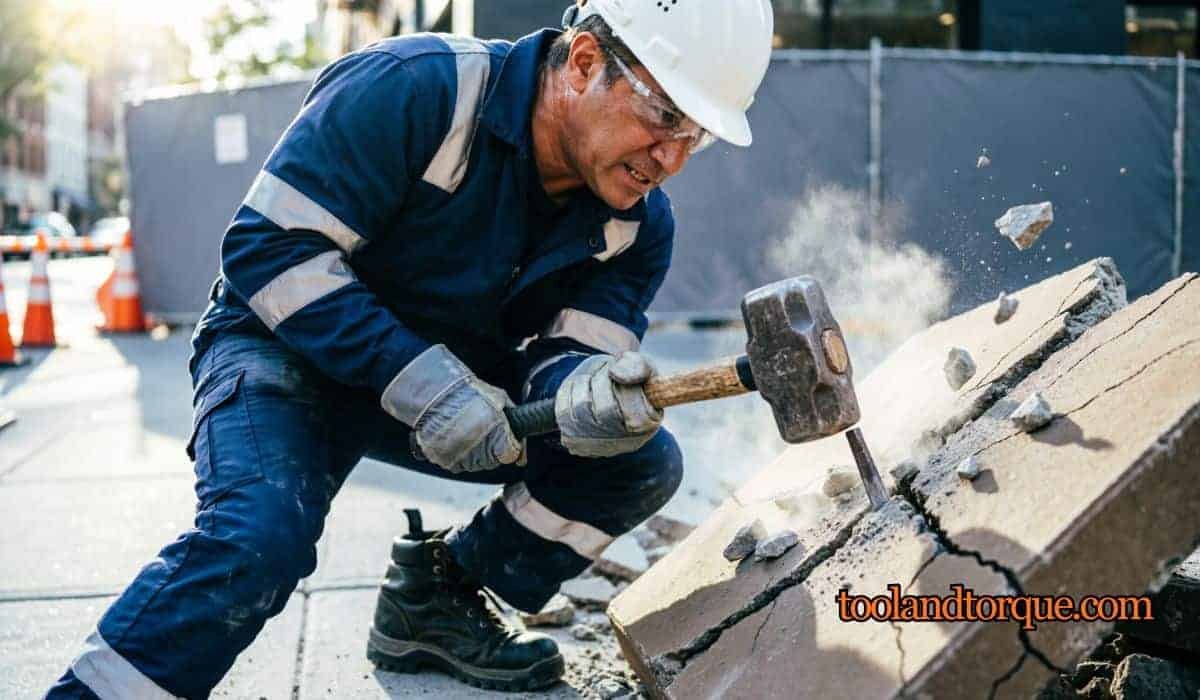
Concrete is tough, but you do not always need expensive machines to remove it. Many homeowners and workers use hand tools to break concrete for repairs, remodeling, or landscaping. With the right tools, techniques, and safety steps, it is possible to break concrete efficiently. This guide explains what you need, how to do it, and mistakes to avoid.
Table of Contents
Choosing The Right Hand Tools
Using strong, durable tools is essential. Some common hand tools for breaking concrete include:
- Sledgehammer – Heavy, long-handled hammer for powerful blows.
- Cold chisel – Sharp-edged tool for splitting and directing cracks.
- Pry bar – Helps lift broken pieces.
- Masonry hammer – Smaller hammer for precision work.
- Safety gear – Gloves, goggles, dust mask, and sturdy boots.
Here is a comparison of basic hand tools:
| Tool | Use | Average Price (USD) |
|---|---|---|
| Sledgehammer | Breaking slabs, thick concrete | $30–$80 |
| Cold chisel | Splitting, guiding cracks | $10–$20 |
| Pry bar | Lifting broken pieces | $15–$40 |
| Masonry hammer | Detail work | $20–$35 |
For larger slabs, a sledgehammer is most effective. For thinner concrete, you can use a masonry hammer and chisel. Always check your tools for cracks or defects before use.
Can an impact driver do the same job as a drill
Preparing The Work Area
Preparation makes the job safer and easier. Clear away objects and cover nearby items to protect from flying debris. Check for pipes or wires under the concrete, as hitting these can cause costly damage or injury. Mark the area you want to break and create a plan for removing debris.
Non-obvious tip: Wetting the concrete lightly with a hose can reduce dust and make breaking easier. However, avoid soaking, as water can make the area slippery.

How To Break Concrete With Hand Tools?
Follow these steps for best results:
- Wear safety gear – Protect your eyes, hands, and feet.
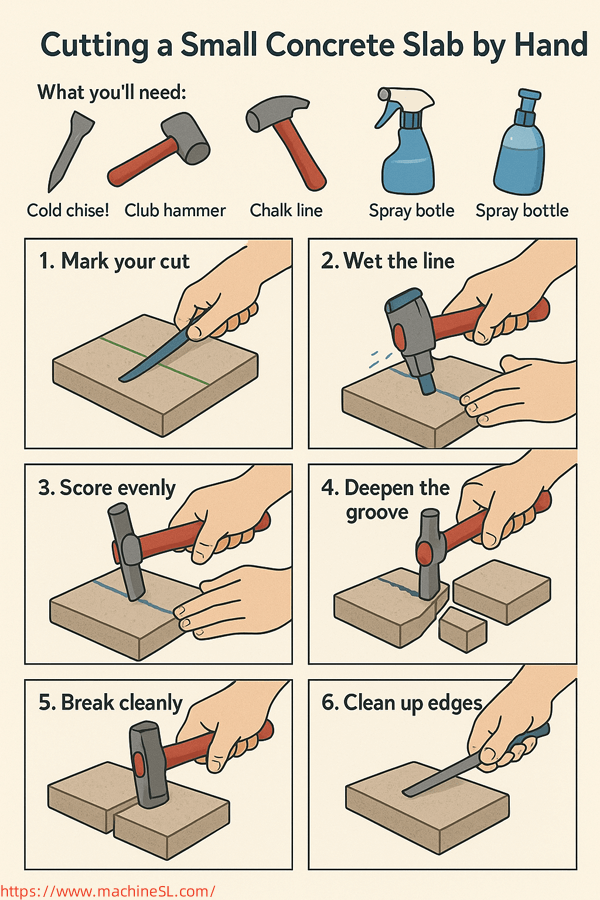
- Score the concrete – Use the cold chisel and hammer to create a groove along the line you want to break. This helps control cracks.
- Strike with sledgehammer – Stand with feet apart for balance. Raise the sledgehammer and bring it down on the groove. Use full arm and shoulder strength for best impact.
- Work in sections – Focus on small areas (2–3 feet) at a time. Breaking smaller pieces is easier than trying to split a whole slab.
- Use pry bar – After cracks form, slide the pry bar under broken chunks to lift them out.
- Repeat as needed – Continue striking and lifting until all concrete is removed.
Example: For a 4-inch thick patio slab, most users need 20–30 sledgehammer blows to break a 2×2 foot section, depending on concrete strength.
How do you use concrete tools properly
Handling Thick Or Reinforced Concrete
Concrete reinforced with steel bars (rebar) or mesh is much harder to break. Hand tools can still work, but progress is slower.
| Type of Concrete | Difficulty (1–5) | Recommended Tool |
|---|---|---|
| Plain slab (3–4 in. thick) | 2 | Sledgehammer |
| Reinforced slab (with rebar) | 4 | Sledgehammer, bolt cutters |
| Old, weathered slab | 1 | Masonry hammer |
If you hit rebar, use bolt cutters to snip exposed metal. For mesh, cut and pull it out with pliers. Breaking around rebar takes more time and effort.
Non-obvious insight: Older concrete often cracks easier than new, dense concrete. If your slab is several decades old, it may need fewer blows.
Removing Debris Efficiently
Broken concrete is heavy. Plan for removal before starting. Use a wheelbarrow or heavy-duty buckets to carry pieces away. Stack debris in a pile for disposal or recycling. Many cities offer concrete recycling programs that accept clean, broken pieces.
Here’s a quick comparison of debris removal options:
| Method | Capacity | Ease |
|---|---|---|
| Wheelbarrow | 60–80 lbs | Easy |
| Buckets | 20–40 lbs | Moderate |
| Manual carry | Varies | Hard |
For larger jobs, renting a dumpster or hiring a removal service can save time.
Mistakes To Avoid
Many beginners make errors that cause injury or waste time. Here are common mistakes and how to avoid them:
- Skipping safety gear – Always wear gloves, goggles, and boots.
- Using the wrong tool – Sledgehammers are for thick slabs, not thin tiles.
- Overstriking – Swinging too hard can damage tools or cause injury.
- Ignoring dust – Concrete dust is harmful. Wet the area lightly and wear a mask.
- Not checking for pipes – Hitting hidden pipes or wires can be dangerous.
Practical tip: Take breaks to avoid fatigue. Tired arms make mistakes and lower strength.
How do you maintain concrete tools after work

Useful Safety Tips
Concrete work is tiring and risky. Protect yourself and others by:
- Keeping children and pets away from the work site
- Checking weather conditions to avoid working in rain or extreme heat
- Using proper lifting techniques to prevent back injury
- Having a first aid kit nearby
The Occupational Safety and Health Administration (OSHA) recommends proper personal protective equipment and safe tool handling. For more, see OSHA Construction Safety.
Frequently Asked Questions
How Thick Of Concrete Can I Break With Hand Tools?
Most hand tools can handle slabs up to 4 inches thick. Thicker slabs or reinforced concrete require more effort and may need power tools.
Is Breaking Concrete Noisy?
Yes, breaking concrete creates loud noise. Wearing ear protection is wise, especially for larger areas or in residential neighborhoods.
Can I Reuse Broken Concrete?
Broken concrete is often reused for fill material in landscaping or as a base for driveways. Clean pieces are best for recycling.
What Is The Fastest Hand Tool For Breaking Concrete?
A sledgehammer is the fastest for most slabs. For smaller jobs, a masonry hammer can be quicker and more precise.
How Long Does It Take To Break A 10×10 Ft Slab?
For a 4-inch thick slab, breaking by hand may take 4–8 hours, depending on strength and number of workers. Reinforced slabs take longer.
Where can I rent concrete mixers and tools
Finally
Breaking concrete with hand tools is possible for most small jobs. With careful planning, strong tools, and safe habits, you can remove slabs and blocks without machines. Remember to check for hidden hazards, use proper gear, and clear debris quickly.
If the job feels too hard, consider asking a professional or renting a small jackhammer.

Leave a Reply