Removing staples from wood might sound simple, but it can quickly turn frustrating if you don’t use the right technique or tools. Staples are common in furniture, flooring, crates, and art frames. Sometimes, they’re hidden under layers of paint or fabric.
Pulling them out the wrong way can damage the wood, leaving ugly dents or scratches behind. With the right approach, you can protect the wood and finish your project efficiently. This article explains how to safely remove staples from wood, which tools to use, and what to do if you hit a tricky staple that refuses to budge.
Table of Contents
Why Staples In Wood Are A Problem
Staples are usually made of strong steel and are pressed deep into the wood. Over time, they can rust or become stuck, making removal harder. In some cases, staples are used in delicate areas, like furniture joints or visible surfaces.
Trying to remove them quickly can easily split the wood or leave holes. For restoration projects, every mark matters because you want the wood to look as good as new.
Tools You Need For Staple Removal
Choosing the right tool matters. Here’s a comparison of the most common options:
| Tool | Best For | Advantages | Drawbacks |
|---|---|---|---|
| Flathead Screwdriver | General staples | Cheap, common | Easy to slip, may damage wood |
| Pliers (Needle-nose or regular) | Gripping and pulling | Good control, precise | Can break staples if twisted |
| Staple Remover (Carpenter’s type) | Frequent use, upholstery | Less wood damage, efficient | Extra cost, not always on hand |
| Nail Puller (Cat’s paw) | Heavy-duty staples | Strong leverage | May leave marks if not used carefully |
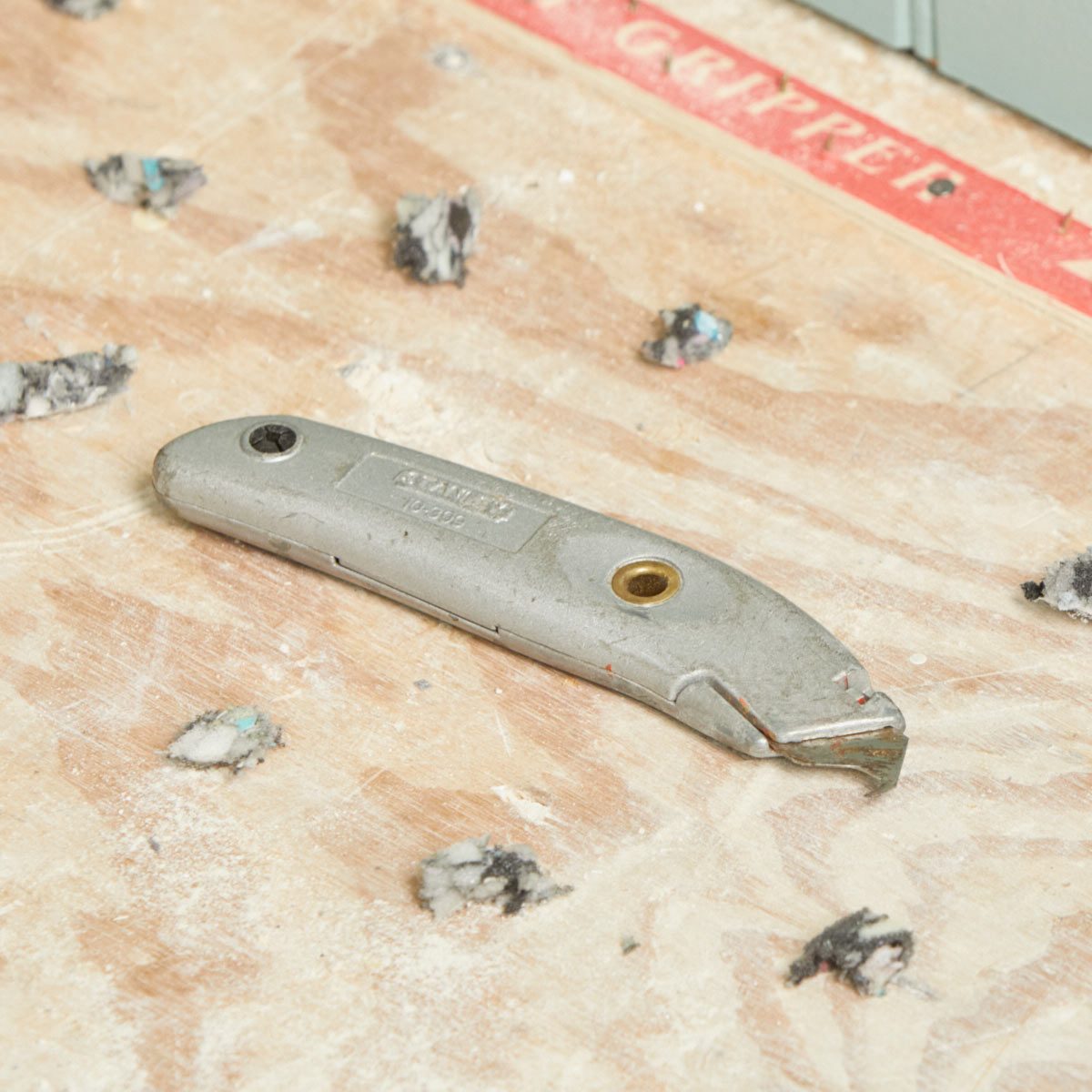
| Utility Knife | Cutting around buried staples | Helps expose staple legs | Risk of cutting wood or yourself |
A staple remover made for upholstery is often the safest tool for wood. For small or hidden staples, needle-nose pliers help you pull staples out cleanly. For very stubborn or broken staples, a cat’s paw or nail puller gives extra leverage.
Preparing The Work Area
Cleanliness and safety are important. Dust, dirt, or old glue around a staple can make removal more difficult. Begin by clearing the area with a soft brush or vacuum. If there’s fabric, carpet, or other material attached, peel it back so you can see all the staples.
Make sure you have good light—you want to spot any hidden or rusted staples.
Wear safety glasses if you’re working with force. Staples can fly out unexpectedly. Gloves can help, but thin gloves are better because thick ones can get caught.
How To Remove Staples From Wood?
Let’s cover the main process to remove most staples from wood without causing damage.
- Assess the staple: Check if the staple head is above the wood, flush, or buried. If the head is sticking up, it’s easier to grip.
- Loosen the staple: For stubborn staples, use a small flathead screwdriver to gently slide under one side of the staple. Wiggle the screwdriver to lift the end slightly.
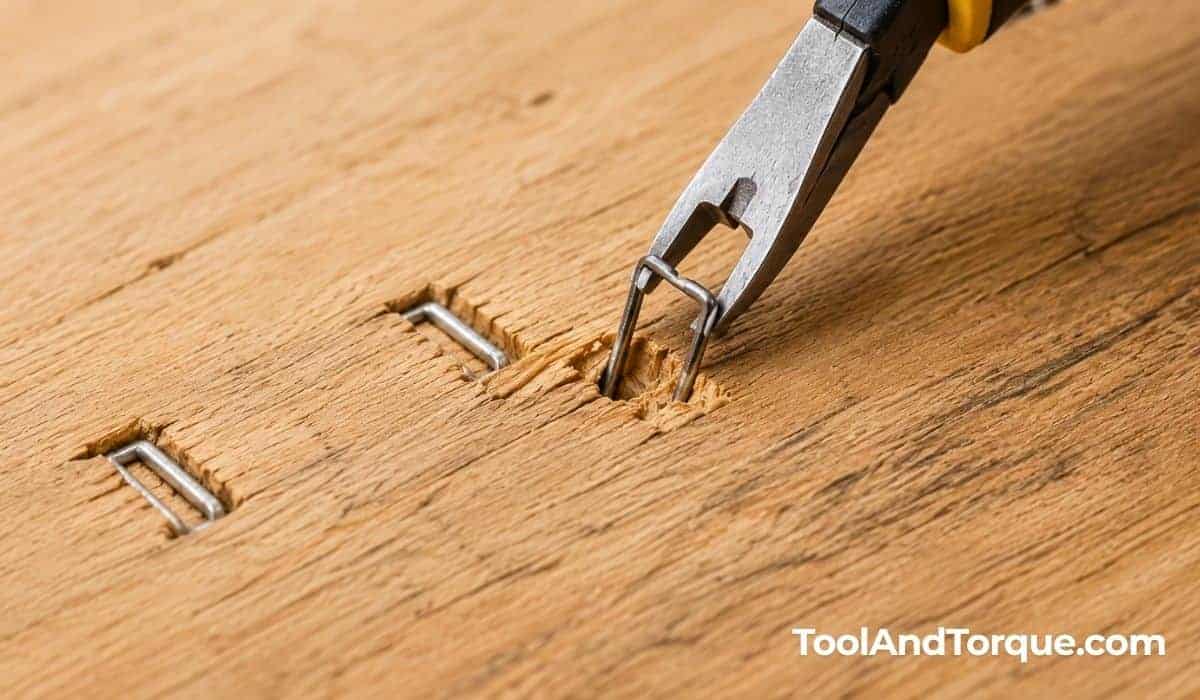
- Grip the staple: Use needle-nose pliers or a staple remover to grab the exposed end. Pull upward slowly, keeping the tool as close to the wood as possible. This reduces the chance of bending or snapping the staple.
- Pull gently: Rock the staple from side to side as you pull. This loosens the legs and reduces splintering.
- Repeat if necessary: If the staple breaks, remove each piece separately. Use a utility knife to clear away any wood or material blocking the staple.
- Inspect the wood: After pulling out the staple, check for splinters or holes. Sand gently with fine sandpaper if needed.
Removing Broken Or Buried Staples
Sometimes a staple breaks, leaving a leg inside the wood. If this happens:
- Use the tip of a utility knife to clear wood around the buried part.
- Insert a needle-nose pliers tip or a dental pick (a small hook tool works well) into the exposed metal.
- Pull straight out. If it’s too deep, consider leaving it if it won’t affect the function or appearance.
For painted or finished surfaces, extra care is needed. Place a thin piece of cardboard or plastic under your tool to protect the finish while prying.

Dealing With Specialty Staples
Not all staples are the same. Some are wide and flat, used in upholstery. Others are narrow and deep, used in construction.
| Staple Type | Common Use | Removal Tips |
|---|---|---|
| Upholstery staples | Chairs, couches | Use staple remover, pull slowly to avoid fabric tears |
| Flooring staples | Wood floors, subfloors | Use cat’s paw or nail puller, protect surface with shim |
| Construction staples | Sheathing, crates | Flathead screwdriver to lift, pliers to pull |
| Rusty staples | Outdoor wood, old furniture | Apply penetrating oil, let sit, then remove with pliers |
Wide staples often bend during removal, while narrow ones may snap. The key is to work slowly and use the right tool.
Avoiding Damage To Wood
The biggest risk is gouging or denting the wood as you work. Here are ways to prevent that:
- Place a thin shim (like a putty knife or plastic card) under your tool as you pry.
- Never twist pliers sideways. Always pull straight up.
- If the staple is deep, work both ends loose before pulling.
- For fine woodworking, consider using a wood block to brace your tool and spread the pressure.
If you do make a dent, fill it with wood filler and sand smooth once dry. For visible surfaces, match the filler color to the wood.
Special Problems And How To Solve Them
Removing Staples From Old Or Painted Wood
Old staples can be rusted in place. Try applying a drop of penetrating oil (like WD-40) and wait 5–10 minutes. This loosens the rust and makes removal easier. For painted surfaces, score around the staple with a utility knife to avoid chipping the paint.
Staples Too Deep To Grip
If the staple is flush or slightly buried, tap a thin flathead screwdriver gently under one end with a small hammer. Once you lift the end, use pliers to pull it out. If the staple is too deep and won’t budge, you may have to leave it or drive it below the surface with a nail set and fill the hole.
Staples In Soft Or Splintery Wood
Soft woods like pine can splinter easily. Always support the wood near the staple with your free hand or a block. Use slow, gentle force. If splinters appear, glue them down before sanding.
When To Use Power Tools
In some cases, such as removing hundreds of staples, hand tools are too slow. There are electric staple removers and staple puller attachments for drills. These are best for flooring or large-scale jobs. However, they can easily damage wood if not used carefully.
If you use a power tool, always test on a hidden area first. Set the tool to the lowest power and adjust as needed.
Cleaning Up After Staple Removal
Staple removal usually leaves behind small holes, dents, or splinters. Here’s how to finish the job:
- Fill holes with wood filler or putty. Let dry, then sand flush.
- Sand the area with fine-grit sandpaper to smooth any rough spots.
- Clean dust with a tack cloth or vacuum.
- Refinish or paint if needed to match the original look.
Professional Tips That Make A Difference
Many beginners make the mistake of using too much force or the wrong tool. Here are two insights experts know:
- Use leverage, not strength: The right tool gives you leverage so you don’t need to pull hard. This keeps the wood safe.
- Work from the outside in: On big projects, start removing staples from the edges, not the center. This prevents splitting and makes it easier to spot hidden staples.
Another tip: if you’re restoring valuable furniture, photograph each step. This helps you put the piece back together and shows any hidden damage.
Safety Reminders
Staple removal creates sharp metal pieces. Always collect staples as you remove them—don’t leave them on the floor where they can cause injury. Dispose of them in a sturdy container.
If you’re using chemicals like oil or glue, work in a well-ventilated space. Keep tools and small parts away from children and pets.
Frequently Asked Questions
How Can I Remove Staples Without Damaging The Wood?
Use the correct tool, such as a carpenter’s staple remover or needle-nose pliers. Place a thin shim under the tool to protect the wood. Go slowly and avoid twisting motions.
What If A Staple Breaks Off Below The Wood Surface?
Try to clear the area with a utility knife and grip the broken piece with fine pliers or a dental pick. If it’s too deep, tap it below the surface with a nail set and fill the hole.
Are There Any Tools That Make Staple Removal Faster For Large Projects?
Yes, electric staple removers and drill attachments can speed up removal on floors or pallets. However, these tools can damage wood if not used with care. Always test on a hidden spot first.
What Should I Do If The Staple Is Rusty And Hard To Remove?
Apply a small amount of penetrating oil and let it sit for several minutes. This helps loosen the rust. Use pliers to pull after the oil works in.
Can I Reuse The Wood After Staple Removal For New Projects?
Definitely. Just make sure to fill any holes, sand the surface smooth, and remove all splinters. Proper finishing will give old wood a new life.

Final Word
Removing staples from wood is a task that rewards patience and the right technique. With careful work, you can restore wood surfaces with little or no visible damage, making your furniture or project look its best.

Leave a Reply